
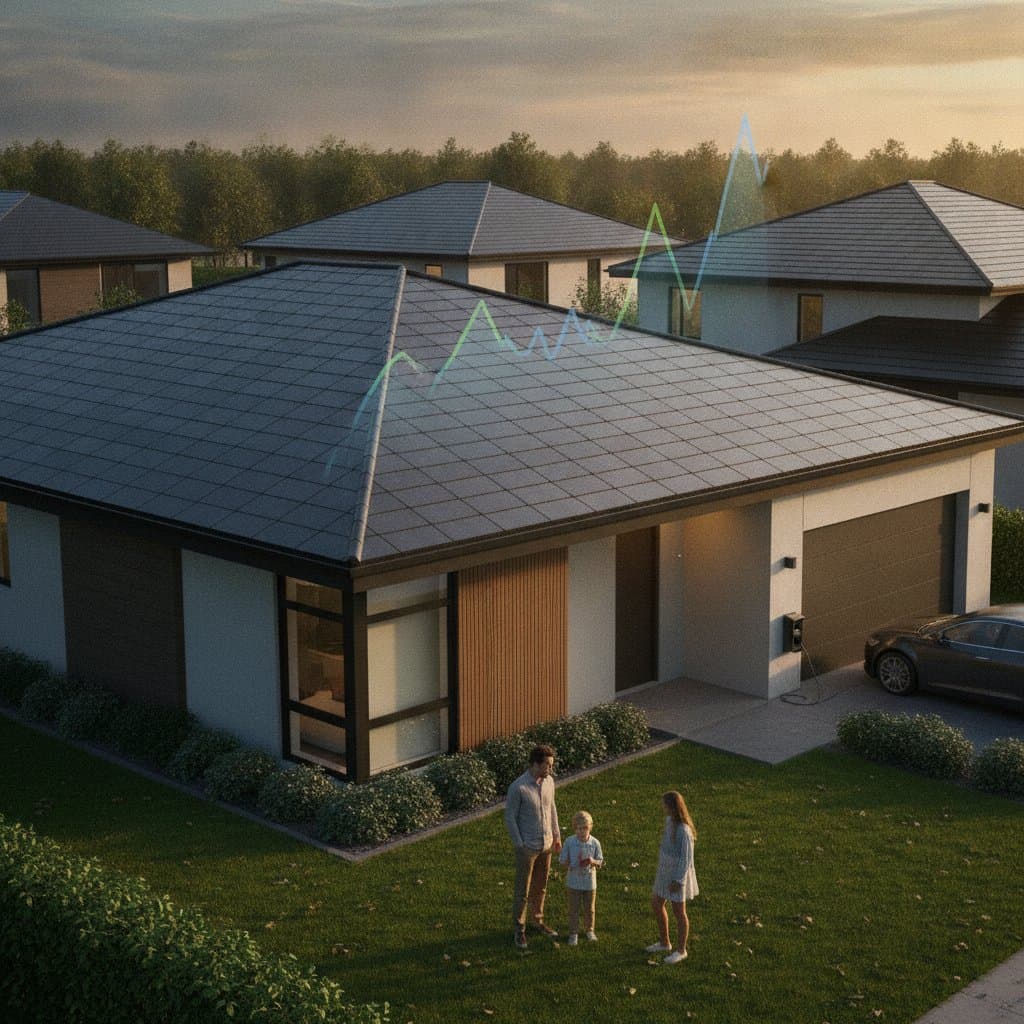
Cost Gap Closes Between Solar Shingles and Panels
The cost difference between solar shingles and traditional solar panels is narrowing. This signals a major shift in the residential solar market in the United States. Analysts tracking equipment pricing and installation costs expect integrated solar roofing systems to approach cost parity with conventional roof mounted modules.
For homeowners planning a renovation, this change creates a new design option. Solar shingles can replace part or all of a roof while producing electricity, rather than adding a separate array above existing roofing. The result is a cleaner roofline that may appeal to homeowners in historic neighborhoods, modern developments, or communities with strict appearance rules.
Shifting Economics of Integrated Solar Roofs
For years, solar shingles carried a cost premium of 40 to 60 percent compared to standard rooftop panels. That premium reflected installation complexity, limited production scale, and the dual function of the product as both roofing material and power generator. Recent advancements in manufacturing efficiency and module integration are changing that equation.
A report by Wood Mackenzie projects that the average installed cost per watt for solar shingles will decrease by nearly 30 percent within the next two years. Panel based systems are expected to see cost reductions closer to 10 percent over the same period. Production volumes are rising and installation methods are simplifying.
Homeowners should compare the full project cost, not only the price of the energy producing material. A panel system may require a separate roof replacement, structural improvements, flashing work, and additional labor. Solar shingles can combine roofing and generation in one scope of work. This can make the overall value more competitive, especially for a home already due for roof replacement.
Leading Manufacturers Expand Capacity
Tesla remains the most visible name in the solar shingle market. Its Solar Roof product combines glass tiles with embedded photovoltaic cells. The company has expanded its network of certified installers and continues to refine its installation process to reduce labor time.
GAF Energy manufactures the Timberline Solar system. This integrates directly into standard roofing materials and leverages existing contractor networks. CertainTeed Solar and Luma Solar are also scaling offerings with unique design characteristics for asphalt and metal roofs.
Product appearance varies by manufacturer, so homeowners should request samples before selecting a system. Some shingles have a smooth glass finish, while others are designed to blend with familiar asphalt roofing. Reviewing samples beside siding, trim, gutters, and exterior paint can help ensure the roof supports the overall design plan.
Installation Complexity and Labor Efficiency
Specialized labor has been a major barrier to wider adoption. Modern shingle systems now use plug and play electrical connectors and interlocking mechanical joints. These reduce the need for specialized training.
GAF Energy states that its system can be installed by a standard roofing crew with minimal additional certification. Installers report that improvements have lowered labor hours by as much as 35 percent compared to earlier models.
The project still requires careful planning. Roof orientation, shade, pitch, ventilation, and electrical service all affect performance. A qualified installer should evaluate the entire roof before work begins and identify areas that should remain dedicated to ordinary shingles. Dormers, valleys, skylights, chimneys, and heavy shade can make some sections unsuitable for solar integration.
Policy Incentives and Domestic Manufacturing
The Investment Tax Credit applies to integrated solar roofing systems. Several state programs offer additional rebates or performance based incentives. Domestic content requirements under federal manufacturing incentives encourage local fabrication of cells and components.
Because incentive rules can change, homeowners should verify eligibility with a tax professional and their installer before signing a contract. Keeping invoices, system specifications, permits, and installation records can also simplify future documentation.
Performance and Durability Considerations
Traditional solar panels maintain higher efficiency ratings, often exceeding 20 percent. Solar shingles typically operate in the 14 to 17 percent range. Manufacturers focus on durability testing that meets electrical safety standards and structural roofing codes for wind, hail, and fire.
Tesla and GAF Energy both offer 25 year performance warranties. Installers note that the integrated approach provides advantages in weatherproofing and aesthetics despite slightly lower output.
Performance depends heavily on roof design. A broad, unshaded surface with a favorable orientation may produce strong results, while a complex roof may need additional energy planning. Homeowners can improve long term value by combining solar shingles with efficient appliances, insulation, smart thermostats, and battery storage. Lower household demand allows the system to cover a larger share of daily electricity use.
Market Outlook and Competitive Dynamics
Analysts estimate that solar shingles could represent between 10 and 15 percent of total U.S. residential solar capacity additions. Tesla holds strong brand recognition. GAF Energy benefits from a nationwide network of roofing contractors.
Competition may encourage clearer pricing, faster installation, and broader design choices. It may also make integrated roofing more accessible during additions, major remodels, and new construction. Architects and builders can plan roof geometry, electrical pathways, and battery locations from the beginning instead of adapting an existing structure later.
Challenges in Scaling Adoption
Supply chain constraints for specialized materials could limit production volumes. Financing structures designed around standard panel systems may require additional verification for integrated roofs. Some companies now offer bundled financing packages that combine roofing and solar under a single contract.
Maintenance is another consideration. Repairs may require both roofing and electrical expertise, particularly if damaged shingles are connected to neighboring modules. Homeowners should ask about local service coverage, replacement procedures, warranty transfers, and expected repair costs before choosing a system.