
2026 Plug-and-Play Balcony Solar Kits for Apartments
Balcony solar systems have moved from novelty to a practical option in distributed energy. Rising power prices and interest in renewables have made plug-and-play kits designed for apartment balconies a growing category of residential generation. After years of limited adoption, the next generation of compact systems is ready to become a standard feature in urban settings.
Why Balcony Solar Matters
Traditional rooftop solar favors homeowners who have suitable roof space and sun exposure. Apartment dwellers, who form a large share of city populations, have had few options. Balcony solar kits address this gap by allowing tenants to generate clean energy without structural changes, landlord approval, or complex grid agreements.
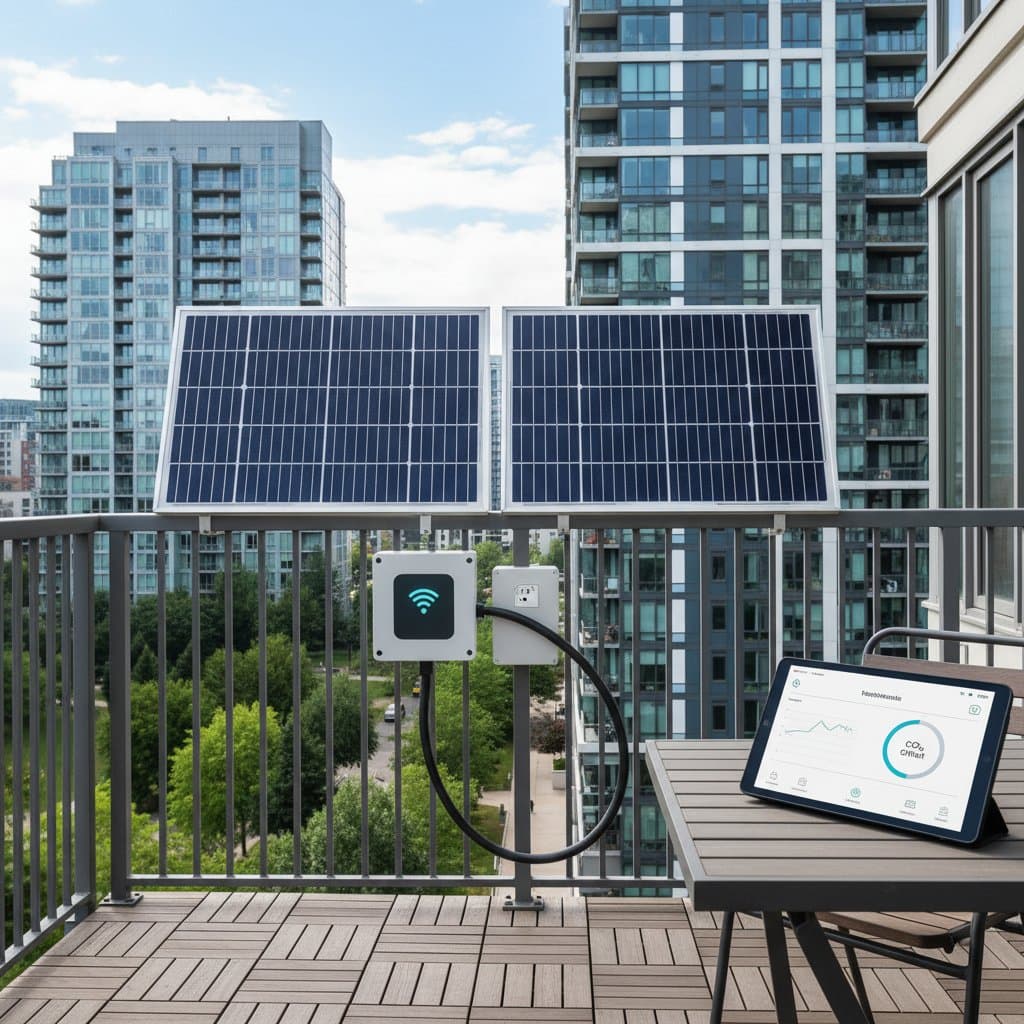
A small solar array mounts to a balcony railing or wall, connects through a microinverter, and plugs into a standard outlet. The system offsets grid electricity during daylight hours and can be removed when tenants relocate. This setup provides renters with access to energy independence previously available only to homeowners.
From Early Experiments to Certified Devices
Initial versions often relied on hobbyist assemblies using off-the-shelf components that sometimes failed to meet safety codes. Current plug-and-play kits are designed and tested as complete appliances. Manufacturers have refined enclosures, power electronics, and connection standards to satisfy utility requirements and integrate with smart meters.
Compact 400-watt modules with integrated microinverters and monitoring features are now available through major retailers in several markets. The United States market has advanced more slowly due to code and interconnection rules, yet progress continues in multiple states.
Key Technical Features
Newer balcony kits incorporate power optimizers, rapid shutdown functions, and smart plugs that link with home energy systems. A typical setup includes the following elements:
- Two or four lightweight panels, each under 25 pounds, suited for railing or wall mounts.
- An integrated microinverter that converts DC to AC at the source.
- A smart energy hub in the form of a plug adapter that tracks output and consumption.
- App-based control that supplies live data, alerts, and time-of-use adjustments.
These systems offset 10 to 25 percent of annual electricity use depending on orientation and sunlight. The change allows renters to take a direct role in the energy transition.
Regulatory Developments
The National Electrical Code has required hardwired connections for photovoltaic systems. Several states now explore simplified registration for plug-in units below certain wattage limits. Utilities increasingly regard these small systems as assets that reduce peak load on distribution circuits.
Certified kits include ground fault protection, surge suppression, and automatic disconnection during outages. The aim is to make balcony solar as straightforward to connect as common household appliances.
Commercial Opportunities
Manufacturers present balcony kits as lifestyle products sold through online channels and delivered ready for use. Installation requires basic tools and less than an hour. A two-panel kit costs less than many major appliances while delivering immediate savings.
Volume sales to renters open paths for subscription models, leasing, and bundled services. Early programs allow tenants in one building to coordinate purchases for better pricing and shared monitoring.
Design Trends and Market Outlook
Future designs focus on flexible mounts, foldable panels, and integrated storage. Aesthetics receive equal attention with efficiency. Panels may serve as privacy screens while smart plugs connect to voice assistants and building dashboards.
This direction brings solar into everyday living spaces. Energy independence becomes accessible without large roofs or ownership.