Fist Solar - Solar Energy & Home Efficiency - Page 17

Showing articles 193 - 204 of 697

Featured image for Stack Federal and State Solar Credits for Maximum Savings

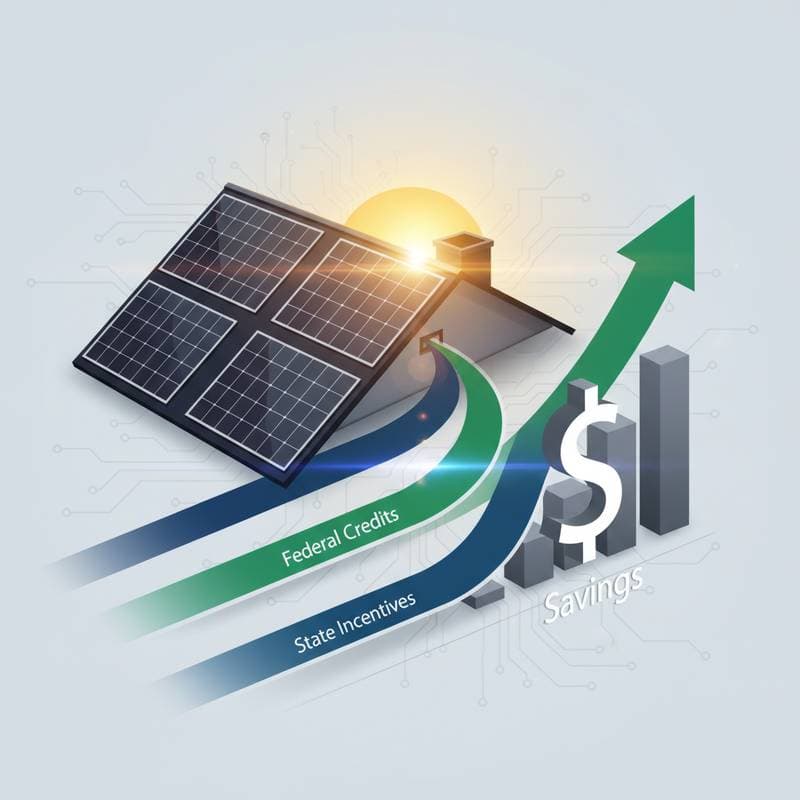
Stack Federal and State Solar Credits for Maximum Savings

Combining federal and state solar incentives can reduce installation costs by up to 50 percent, reshaping project economics for homeowners, businesses, and developers. The Inflation Reduction Act provides a 30 percent federal tax credit, which pairs effectively with state rebates and adders. Strategic use of these benefits leads to faster returns and supports widespread clean energy adoption.

5 min read
Featured image for Pay for Solar Through Your Property Tax Bill

Pay for Solar Through Your Property Tax Bill

PACE financing enables solar installations without initial payments, repaid via property taxes. This public-private model delivers ownership advantages, affordability, and clean energy access. Proper implementation enhances savings, appraisals, employment, and environmental outcomes while upholding consumer safeguards.

6 min read
Featured image for IRS Confirms 5-Year Solar Depreciation Starts 2026

IRS Confirms 5-Year Solar Depreciation Starts 2026

The IRS has finalized a 5-year depreciation schedule for solar energy property effective 2026, offering developers and investors reliable tax treatment. This policy enhances project economics, speeds up capital recovery, and bolsters U.S. manufacturing initiatives. Clear depreciation rules now support stable financing, procurement, and investment decisions in solar markets nationwide.

4 min read
Featured image for Solar Module Prices Jump 18% on 2026 Tariff News

Solar Module Prices Jump 18% on 2026 Tariff News

U.S. solar module prices have risen 18% in response to impending 2026 import tariffs, altering project costs, procurement approaches, and financing options. Developers confront narrower margins, evolving supply chains, and heightened focus on domestic production. Although short-term market turbulence persists, these tariffs could hasten the growth of American solar manufacturing and foster energy self-reliance.

5 min read
Featured image for Solar Property Tax Exemption Ends in 2026

Solar Property Tax Exemption Ends in 2026

The solar property tax exemption, which prevents added system value from increasing property taxes, expires in 2026. This change could elevate annual costs and extend payback periods for solar investments. Property owners must prioritize installations now to lock in these savings and ensure long-term financial advantages.

5 min read
Featured image for New 2026 Solar Tariffs Add 30% to Panel Costs

New 2026 Solar Tariffs Add 30% to Panel Costs

The 2026 tariffs elevate solar panel costs by 30 percent, altering project economics and postponing gigawatts of planned installations. Developers encounter reduced margins, financing hurdles, and supply limitations as domestic production works to expand. Leaders in the industry adjust sourcing approaches, integrate advanced technologies, and revise strategies to maintain progress in United States clean energy initiatives.

6 min read
Featured image for Solar Depreciation Rules Shift in 2026: What Changes

Solar Depreciation Rules Shift in 2026: What Changes

As 2026 nears, solar investors must navigate IRA depreciation changes that alter project economics and tax strategies. With bonus depreciation phasing out, expect tighter cash flows and lower net present values, requiring advanced modeling, partnerships, and planning to thrive in the evolving renewables market.

3 min read
Featured image for Solar Panels to Cost 18% More Starting 2026

Solar Panels to Cost 18% More Starting 2026

New U.S. tariffs effective in 2026 will increase solar panel prices by 18%, impacting procurement, financing, and project economics. As policymakers promote domestic manufacturing, industry leaders accelerate purchases, diversify suppliers, and adapt to supply chain shifts in the evolving American solar sector.

6 min read
Featured image for Earn $800 Yearly Renting Your Home Battery to VPPs

Earn $800 Yearly Renting Your Home Battery to VPPs

Homeowners can earn up to $800 a year by connecting home batteries to virtual power plants, aiding grid stability during peaks. This initiative promotes renewable energy adoption, cuts fossil fuel use, and offers financial and environmental advantages as distributed resources transform U.S. electricity systems.

6 min read
Featured image for Solar Roof Bundles Now Qualify for 40% Tax Credit

Solar Roof Bundles Now Qualify for 40% Tax Credit

Homeowners and businesses gain access to a 40% federal tax credit for integrated solar and roof installations. Recent Treasury updates include energy-contributing roofing materials in eligibility, influencing financing, installation practices, and manufacturing approaches. This development fosters quicker solar uptake, reduced expenses, and innovative combined energy solutions across the nation.

5 min read
Featured image for IRS Solar Depreciation Rules Change in 2026

IRS Solar Depreciation Rules Change in 2026

The IRS introduces major solar depreciation revisions in 2026, altering classifications, bonus rules, and timelines. These shifts demand proactive adjustments in project planning, financing, and compliance to sustain solar sector growth.

5 min read
Featured image for Solar Tariffs Drive 18% Panel Price Spike in 2026

Solar Tariffs Drive 18% Panel Price Spike in 2026

Solar equipment prices rose 18% this spring due to new import tariffs, forcing developers, installers, and financiers to adjust budgets, diversify suppliers, and refine designs. These changes support domestic manufacturing goals while challenging short-term project viability and energy independence efforts.

4 min read
Featured image for Solar Depreciation Rules Reshape Project Returns in 2026

Solar Depreciation Rules Reshape Project Returns in 2026

The 2026 adjustments to solar tax depreciation rules are transforming strategies for commercial investments. With accelerated benefits phasing out, precise timing of projects is essential to capture remaining advantages. Businesses should prioritize documentation, consult experts, and consider energy storage pairings to enhance profitability in this shifting financial landscape.

4 min read